
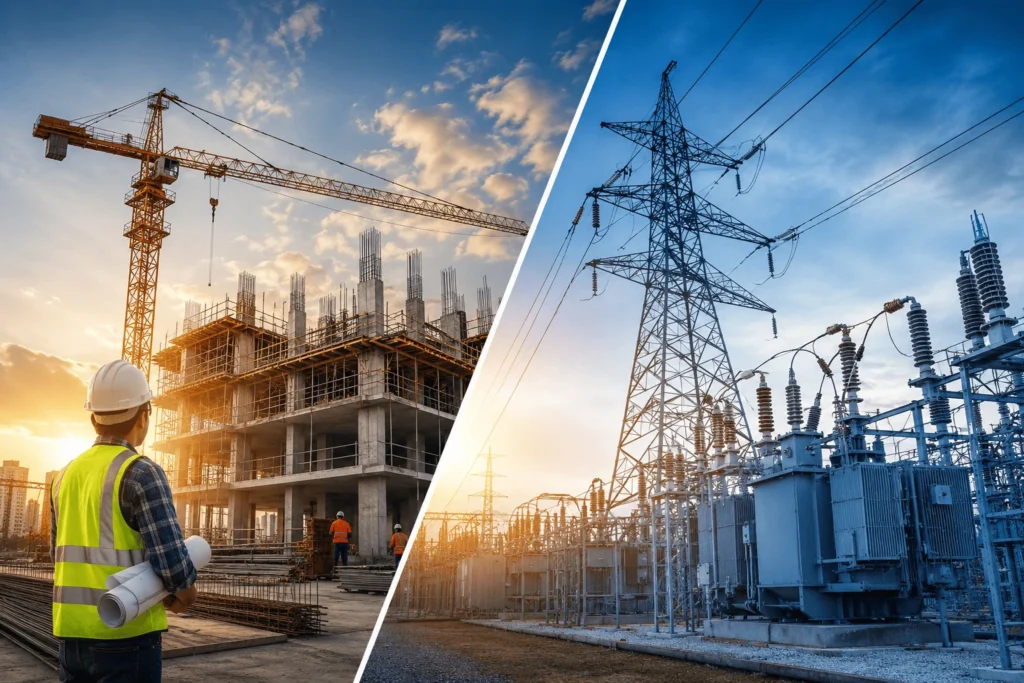


Differences Between Construction SBU and JPTL SBU: Many business owners are still confused about the differences between Construction SBU and JPTL SBU, especially when they want to participate in government tenders, SOE projects, or private projects related to construction and electrical installation.
Choosing the wrong type of Business Entity Certificate (SBU) can cause a company to fail to meet tender requirements, be rejected during the verification process, or even be unable to carry out a project that has already been awarded.
So, what exactly is the difference between Construction SBU and JPTL SBU? Can a company have both? And when is each SBU required?
This article will discuss these differences in detail so that you can determine the right certification according to your company’s business activities.
What Is a Construction SBU?
Construction SBU (Construction Business Entity Certificate) is a certificate issued to business entities operating in the construction services sector. This SBU serves as proof that the company has met the competency, classification, and qualification standards established by the government to carry out construction work.
Scope of Construction SBU
Some examples of projects that require a Construction SBU include:
- Building construction
- Road construction
- Bridge construction
- Industrial building construction
- Construction
- Other civil works
Companies operating as building contractors are generally required to have a Construction SBU according to the relevant work sub-classification.
What Is a JPTL SBU?
JPTL SBU (Electricity Supporting Services Business Entity Certificate) is a certificate issued to business entities operating in the electricity sector. This SBU is a key requirement for companies carrying out installation, maintenance, consulting, and testing work related to electrical power systems.
Unlike the Construction SBU, which focuses on construction work in general, the JPTL SBU specifically regulates business activities in the electricity sector.
Scope of JPTL SBU
Examples of projects that require a JPTL SBU include:
- Electrical power installations
- Electrical network construction
- Electrical substation construction
- Operation of electrical power systems
- Electrical installation maintenance
- Electricity consulting services
- Electrical power installation testing
JPTL SBU certification is frequently required for projects involving PLN, manufacturing industries, mining, energy, and electrical infrastructure.
Key Differences Between Construction SBU and JPTL SBU
Although both are business certifications, they have different legal foundations, scopes, and functions.
| Aspect | Construction SBU | JPTL SBU |
|---|---|---|
| Business Sector | Construction services | Electricity sector |
| Main Focus | Buildings and infrastructure | Electrical installations and power systems |
| Regulation | Construction sector | Electricity sector |
| Scope | Buildings, roads, bridges, civil works | Electrical networks, substations, electrical installations |
| Qualified Personnel | Construction SKK | Electricity competency certification |
| Main Tenders | Construction projects | Electrical projects |
| Main Users | Contractors | Electrical contractors and energy companies |
The table above shows that the most fundamental difference lies in the type of work carried out by the company.
Can a Construction SBU Be Used for Electrical Projects?
This is one of the most frequently asked questions.
The answer is: not always.
Many electrical projects specifically require a JPTL SBU.
:
- Electrical distribution network construction
- Low-voltage electrical installations
- Medium-voltage electrical installations
- Distribution substation construction
- Industrial electrical system maintenance
Even if a company has a Construction SBU, these projects may still require a JPTL SBU.
Therefore, contractors operating in the electrical sector should not rely solely on a Construction SBU.
When Should You Use a Construction SBU?
A company should have a Construction SBU if its main business activities include:
Building Construction
Such as:
- Office buildings
- Hospitals
- Hotels
- Schools
- Apartments
Civil Construction
Such as:
- Highways
- Bridges
- Dams
- Drainage channels
Industrial Construction
Such as:
- Factories
- Warehouses
- Industrial areas
If most of the company’s projects fall into these categories, a Construction SBU becomes a primary requirement.
When Is a JPTL SBU Required?
A JPTL SBU is required when a company carries out work directly related to electrical power systems.
Examples include:
Electrical Installation
- Building electrical installations
- Factory electrical installations
- Industrial electrical installations
Distribution Networks
- Low-voltage networks
- Medium-voltage networks
- High-voltage networks
Electrical Substations
- Distribution substations
- Main substations
Electrical System Maintenance
- Electrical panel maintenance
- Electrical network maintenance
- Substation maintenance
Without a JPTL SBU, a company may fail to meet the legal and technical requirements for electrical projects.
Can a Company Have Both a Construction SBU and a JPTL SBU?
Yes, it can.
In fact, many large companies hold both certifications to expand the scope of their business activities.
For example:
An EPC (Engineering, Procurement, Construction) company may handle:
- Civil works
- Building construction
- Electrical installations
- Substation construction
- Distribution network construction
In such situations, having both a Construction SBU and a JPTL SBU can provide greater opportunities when participating in tenders.
Read Also: Difference Between SBU, NIB, and SIUJK (Latest OSS RBA Update)
Benefits of Having the Appropriate SBU
Choosing the right SBU provides many benefits for a company.
1. Meeting Tender Requirements
Most government and SOE projects require an SBU that matches the scope of work.
2. Increasing Company Credibility
Certification demonstrates that the company has met the competency standards established by the relevant regulator.
3. Expanding Project Opportunities
Companies can participate in more tenders according to the classifications they hold.
4. Reducing Administrative Risks
Company documents become more complete during evaluation and audit processes.
Common Mistakes When Applying for an SBU
Many business entities make the following mistakes:
Choosing an Inappropriate Classification
As a result, the company may be unable to participate in its targeted tenders.
Not Having Qualified Personnel
Each certification has different requirements for qualified personnel.
Assuming a Construction SBU Can Replace a JPTL SBU
This is one of the most common mistakes made by electrical contractors.
Failing to Maintain Certification
SBU certification must always be renewed according to the applicable regulations.
FAQ – Differences Between Construction SBU and JPTL SBU
1. What is a Construction SBU?
A Construction SBU is a business entity certificate used to carry out construction service activities.
2. What is a JPTL SBU?
A JPTL SBU is a business entity certification for activities related to electricity supporting services.
3. Can a Construction SBU be used for electrical installation work?
Not always. Many electrical installation projects require a JPTL SBU.
4. Are electrical contractors required to have a JPTL SBU?
Yes, particularly when the work is directly related to electrical power systems.
5. Can a company have both types of SBU?
Yes. Many companies hold both Construction SBU and JPTL SBU certifications.
6. What is the difference between Construction SBU and JPTL SBU?
A Construction SBU is for building and infrastructure projects, while a JPTL SBU is for electricity-related projects.
7. Do PLN projects require a JPTL SBU?
Generally, yes, particularly for electrical installation and power network projects.
8. Is a JPTL SBU valid throughout Indonesia?
Yes, as long as the company’s certification and licensing remain active.
9. How long does the SBU application process take?
The processing time varies depending on the completeness of the documents and the classification being applied for.
10. Can MSMEs apply for an SBU?
Yes. Small and large business entities can apply for an SBU in accordance with the applicable regulations.
Conclusion – Differences Between Construction SBU and JPTL SBU
The difference between Construction SBU and JPTL SBU lies in the business sectors they regulate. A Construction SBU is used for construction and infrastructure projects, while a JPTL SBU is intended for work related to electrical power systems.
If a company operates as a building contractor, a Construction SBU is the primary requirement. However, if a company carries out electrical installations, distribution networks, substations, or electrical power system maintenance, a JPTL SBU is required.
In many cases, holding both certifications can be an effective strategy to expand business opportunities and increase the company’s competitiveness when participating in government and private tenders.
Not sure whether your company needs a Construction SBU, JPTL SBU, or both? Conduct a business classification analysis first to ensure that the certification you apply for matches your field of work and target projects. By choosing the right SBU, your chances of winning tenders and growing your business can be significantly improved.
Contact Global Jaya Consulindo for consultation and Construction SBU or JPTL Certification